The Viral Claim: Can an Arctic Air as Seen on TV Catch Fire?
Stories of the Arctic Air personal cooler catching fire have circulated online for years. These alarming anecdotes often describe smoke, melting plastic, or even flames. It’s crucial to separate sensational social media posts from verified incidents. We dug into consumer reports, safety databases, and expert analysis to find the truth.
The direct answer is that while any electrical device carries a inherent risk, there are no widespread, verified reports from official agencies like the CPSC of an arctic air as seen on tv catch fire under normal use. Most panic stems from misunderstanding how evaporative coolers function. However, misuse or faulty components can lead to dangerous overheating, which is the core of the concern.
This investigation will clarify the real risks versus the myths. Understanding the difference protects you and your home. Let’s start by examining the technology inside these popular gadgets.
The Anatomy of a Viral Scare Story
Online fear often spreads faster than facts. A blurry video of a smoking device can be misinterpreted as a fire. In many cases, what users describe when searching arctic air as seen on tv catch fire is actually severe overheating or electrical arcing rather than an appliance bursting into flames. These are serious safety issues but differ from an open flame igniting.
The “as seen on TV” label can sometimes mislead consumers about a product’s capabilities and limits. Marketing emphasizes portability and cooling relief, often downplaying maintenance needs. This gap between expectation and reality can lead to improper use, which then increases risk. It’s one reason why phrases like arctic air as seen on tv catch fire have become common search queries.
Our goal is to equip you with knowledge, not just fear. Understanding the facts behind arctic air as seen on tv catch fire concerns is the first step toward using the product safely and confidently.
How the Arctic Air Cooler Actually Works
The Arctic Air is an evaporative cooler, also known as a swamp cooler. It does not use a compressor or flammable refrigerants like an air conditioner. Instead, it relies on a simple physical process. A fan draws warm air through a water-soaked cooling filter.
As the water evaporates, it absorbs heat from the air, providing a cooling effect. The now-cooler, more humid air is then blown out into the room. This process is inherently safe from a combustion standpoint because there is no chemical reaction or high-pressure system involved. Understanding this design helps explain why arctic air as seen on tv catch fire concerns are generally linked to electrical issues rather than the cooling technology itself.
The primary electrical components are a small fan motor and a water pump. These are low-power devices typically running on a standard USB or DC adapter. The fire risk, therefore, doesn’t come from the cooling mechanism itself but from the electrical components powering it. This distinction is important when evaluating reports or discussions about arctic air as seen on tv catch fire.
Key Components and Their Functions
The Fan Motor: This is the part that moves air. If obstructed by dust or a faulty bearing, it can overheat. An overheating motor is a potential ignition source, especially if surrounded by flammable materials like dry dust or lint.
The Water Pump: A small pump circulates water from the tank to the filter. If the pump fails or the water runs dry, the system can continue to run without cooling. This might cause the motor to work harder, though the main issue becomes a lack of cooling effect rather than immediate fire danger.
The Power Adapter: Often the weakest link. Low-quality, off-brand, or damaged USB power blocks can overheat, short-circuit, or fail catastrophically. Using an incorrect or faulty adapter is a leading cause of problems with small electronic devices.
The Real Fire Risk Factors for Personal Air Coolers
What Conditions Increase the Risk Behind Arctic Air As Seen on TV Catch Fire?
Although the chances of arctic air as seen on tv catch fire are extremely low for a genuine, well-maintained unit, certain conditions can increase the risk of electrical problems. Ignoring these warning signs is far more likely to create a hazard than the device itself. In nearly every case, concerns about arctic air as seen on tv catch fire involve electrical issues rather than mechanical failures.
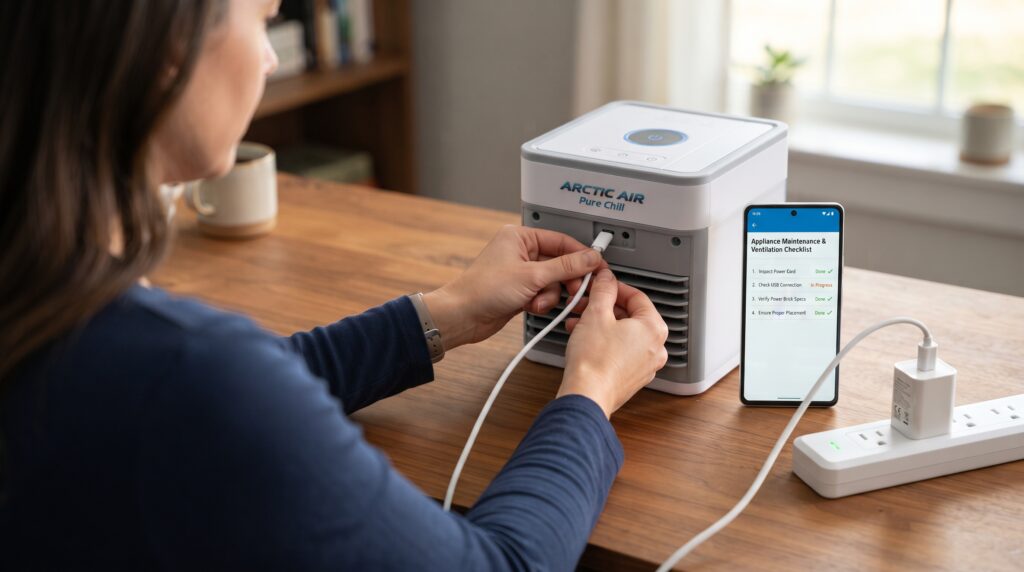
First, using an incorrect or damaged power supply is one of the biggest risk factors. Many people searching arctic air as seen on tv catch fire are actually dealing with devices powered by the wrong charger. Plugging a 5V cooler into a 12V adapter can cause immediate component failure, excessive overheating, and permanent damage. Likewise, frayed power cords, loose USB connections, or damaged plugs can create electrical arcing or sparks that should never be ignored.
Second, poor maintenance can contribute to overheating. A dirty or clogged filter restricts airflow, forcing the fan motor to work harder than intended. Over time, this additional strain can generate excess heat and reduce the device’s lifespan, which is another reason some users become concerned about arctic air as seen on tv catch fire.
Third, placing the cooler on flammable or poorly ventilated surfaces creates unnecessary risk. Operating the unit on a plush carpet, bed, couch, blanket, or too close to curtains can block ventilation openings. Restricted airflow traps heat around the motor and power components, increasing operating temperatures. Following the manufacturer’s placement recommendations is one of the simplest ways to reduce concerns about arctic air as seen on tv catch fire.
Understanding these risk factors helps explain why reports related to arctic air as seen on tv catch fire are typically linked to misuse, damaged accessories, or poor maintenance rather than normal everyday operation. The following sections examine each of these risks in greater detail and explain how to avoid them.
Risk Factor 1: Faulty or Improper Power Sources
When researching whether arctic air as seen on tv catch fire, one of the most important factors to consider is the power adapter. The USB power adapter is a critical safety component because manufacturers design it with specific voltage and amperage ratings. Using a generic, unregulated charger from a discount store can deliver unstable power, which may stress the cooler’s internal circuitry and lead to excessive heat buildup.
If you’re concerned about arctic air as seen on tv catch fire, always use the manufacturer-provided adapter whenever possible. If the original adapter is lost or damaged, choose a replacement that matches the required voltage (V) exactly and provides at least the recommended amperage (A). A replacement with a higher amperage rating is generally acceptable because the device only draws the current it needs, but using a higher voltage than specified can damage internal components and increase the risk of overheating.
Regularly inspect the power cord and adapter for cracks, frayed insulation, sharp kinks, or exposed wires. Damaged cables are a common reason users become concerned that arctic air as seen on tv catch fire, as worn electrical components can create short circuits or overheating if ignored.
Pro Tip: To further reduce concerns about arctic air as seen on tv catch fire, plug the cooling device directly into a wall outlet instead of a power strip that is already overloaded with multiple appliances. A dedicated outlet provides a more stable power supply, helps prevent circuit overload, and supports safer everyday operation.
Risk Factor 2: Neglect and Poor Maintenance
Evaporative coolers require water and have filters that get dirty. When the cooling filter is clogged with mineral deposits (from hard water) or dust, airflow is restricted. The fan motor must then work harder to pull air through the blockage, causing it to overheat. A motor running hot for extended periods can eventually fail or ignite surrounding debris. Many concerns behind arctic air as seen on tv catch fire searches stem from maintenance issues like these rather than defects in the cooling system itself.
Furthermore, letting the water tank run completely dry means the pump runs dry. While most have auto-shutoff features, a malfunctioning unit could keep trying to pump, causing the pump motor to burn out. Stagnant water left in the tank for weeks can also promote mold, which doesn’t cause fire but is a health hazard.
Regular cleaning is not just about performance; it’s a core safety practice. A well-maintained cooler runs efficiently and coolly, minimizing all risks and reducing the likelihood of situations that contribute to arctic air as seen on tv catch fire concerns.
Risk Factor 3: Dangerous Placement and Ventilation
These devices need space to breathe. The intake and exhaust vents must remain completely unobstructed. Placing the Arctic Air on a shag rug, a blanket, or in a cramped corner is asking for trouble. Blocked vents cause heat to build up inside the unit’s housing rapidly.
This trapped heat affects everything: the motor, the electronics, and the plastic casing. Plastic can warp or melt, and wires can overheat. Improper placement is another common factor discussed in conversations about arctic air as seen on tv catch fire. Always place the cooler on a hard, stable, level surface away from fabrics, papers, or other flammable items.
Ensure at least 12 inches of clear space on all sides, especially around the back where heat often dissipates. Think of it like a tiny computer fan—it needs airflow to stay cool, helping prevent overheating and reducing the chance of electrical problems.
Step-by-Step Guide to Using Any Air Cooler Safely
Following a simple safety checklist can virtually eliminate any risk of an incident. This guide applies to the Arctic Air and all similar personal evaporative coolers. Consistency is key to long-term safe operation.
Unbox and Inspect: Before first use, carefully inspect the unit, cord, and power adapter for any signs of damage from shipping. Look for cracks, loose parts, or exposed wiring.
Use the Right Power: Plug the provided adapter directly into a wall outlet. Avoid using car chargers, laptop USB ports, or questionable power banks unless the manual explicitly permits it.
Prepare with Clean Water: Fill the tank with cool, clean tap water. Some manuals recommend distilled water to prevent mineral buildup. Never use chemicals or ice packs not designed for the unit.
Ensure Proper Placement: Set the cooler on a hard, flat surface like a desk, table, or floor. Keep it away from beds, sofas, curtains, and direct sunlight, which can heat the unit externally.
Operate with Ventilation: Turn it on and confirm air is flowing strongly from the front vents. Listen for the gentle hum of the fan and pump; any grinding or buzzing is a warning sign.
Perform Regular Maintenance: Empty and dry the tank if not used daily. Clean the filter and interior with a soft brush and mild vinegar solution (per manual instructions) at least every two weeks.
Never Leave Unattended for Long Periods: While safe for sleeping in the same room, do not leave the cooler running in an empty home for days. Turn it off when leaving the house.
Store Safely: When not in use for the season, unplug it, clean it thoroughly, let all parts dry completely, and store it in a cool, dry place.
How to Spot Counterfeit or Poor-Quality Units
The market is flooded with knock-offs and “too good to be true” deals. These counterfeit products often bypass safety certifications and use substandard components, making them much more likely to overheat. Protecting yourself starts at the point of purchase.
First, buy from authorized retailers like the official website, major department stores, or reputable online marketplaces (sold by the official brand store). Be wary of third-party sellers on platforms offering deep discounts. Check the packaging for spelling errors, blurry logos, or missing regulatory marks like UL, ETL, or CE.
Examine the product itself. A genuine article will have a solid build quality with no sharp plastic seams. The power adapter should be branded and feel substantial, not light and flimsy. The user manual will be professionally printed and detailed.
Feature
Genuine Product
Counterfeit Risk
Price
Moderate, consistent across retailers
Unusually low (“90% off!”)
Packaging
High-quality print, clear safety marks (UL/ETL)
Typos, blurry images, missing marks
Power Adapter
Branded, with output specs clearly labeled
Unbranded, lightweight, vague labeling
Build Quality
Smooth plastic, secure fittings, quiet operation
Flimsy, creaky, loud or grinding fan
Seller
Official brand store or major retailer
Unknown third-party with few reviews
Expert Insights on Appliance Safety
We consulted with a certified electrical safety inspector to add professional context. “The principle is simple,” he stated. “Any device that plugs into a wall has the potential to be a fire hazard if compromised. The difference between safe and dangerous often comes down to quality control and user behavior.”
He emphasized that modern consumer electronics are designed with multiple fail-safes. These include thermal fuses that cut power if temperatures get too high and capacitors rated for higher voltages than needed. However, in cheap counterfeits, these safety components are often the first to be omitted to save cost. This is one reason why discussions around arctic air as seen on tv catch fire frequently highlight the importance of buying genuine products from reputable retailers.
“Your nose is one of the best detectors,” he added. “If you smell ozone—a sharp, metallic scent—or burning plastic, unplug the device immediately. That smell is often the first sign of electrical insulation breaking down, which precedes failure.” This expert insight underscores that vigilance is a key layer of safety and provides valuable context for anyone researching arctic air as seen on tv catch fire.
Myth vs. Fact: Separating Hype from Hazard
When people search for arctic air as seen on tv catch fire, they often come across misleading claims or incomplete information. Understanding the facts can help separate genuine safety concerns from common myths.
Myth: The water in the Arctic Air can cause an electrical fire.
Fact: This is one of the biggest misconceptions behind searches for arctic air as seen on tv catch fire. The water is stored in a separate reservoir and passes through a cooling filter. Under normal operation, it does not come into contact with the device’s electrical components. The cooling process is evaporative, meaning the water itself is not combustible and cannot directly cause a fire.
Myth: Adding ice cubes will make it cooler and is perfectly safe.
Fact: Some users looking into arctic air as seen on tv catch fire wonder whether adding ice is harmless. While ice may provide a temporary boost in cooling, melting ice increases the amount of water inside the unit and can create excess condensation. If water leaks into areas containing electronic components, it could increase the risk of a short circuit. Following the manufacturer’s instructions is the safest approach.
Myth: If it’s sold on TV or by a major retailer, it must be 100% safe.
Fact: Another assumption behind many arctic air as seen on tv catch fire discussions is that widespread availability guarantees absolute safety. While products sold legally are required to meet applicable safety standards, no electrical appliance is completely risk-free. Safe operation depends on both the product’s design and the user’s habits. Using the device as instructed, keeping it clean, avoiding damage, and inspecting it regularly significantly reduces potential risks.
What to Do If Your Appliance Overheats or Smokes
Stay calm and act quickly. Your immediate response can prevent a small incident from becoming a disaster. Whether you’re concerned because you searched arctic air as seen on tv catch fire or noticed unusual behavior from your unit, do not try to investigate while the device is still powered on.
Unplug Immediately: Do not touch the device itself first. Go directly to the wall outlet or power strip and pull the plug. This removes the source of the problem.
Isolate the Device: If safe to do so (and only if it’s not actively flaming), move the cooler to a non-flammable surface like a tile floor or cement. Use an oven mitt if the casing is hot.
Ventilate the Area: Open windows and turn on fans to clear any smoke or unusual odors from the room. This protects your lungs and helps dissipate heat.
Do Not Use Water: Never pour water on an electrical fire or overheating device. You risk severe electrocution. For small flames, use a Class C fire extinguisher or baking soda.
Contact the Manufacturer: Once the device is completely cool, report the incident to the company’s customer service. They may have a safety program and need the batch number for investigation, especially if your experience resembles reports related to arctic air as seen on tv catch fire.
Dispose Properly: Do not plug the unit in again. Follow local electronics recycling guidelines to dispose of it. Do not throw it in regular trash, as damaged batteries or capacitors can be a risk.
Safer Alternatives for Personal Cooling
If stories about arctic air as seen on tv catch fire have made you hesitant to use a personal evaporative cooler, there are several effective cooling alternatives that can provide comfort while reducing concerns about electrical safety.
High-Velocity Floor Fans: Modern fans with brushless DC motors are incredibly efficient, cool-running, and move a lot of air. They use simple mechanical action with minimal electrical risk and are great for whole-room airflow.
Passive Cooling Techniques: This includes wearing damp, cool cloths on the neck or wrists. Taking cool showers before bed and using breathable, moisture-wicking bedding (like bamboo or linen) can drastically improve comfort without electronics.
Strategic Home Management: Use blackout curtains to keep the sun out during the day. Create cross-ventilation by opening windows on opposite sides of your home at night to flush out hot air. These methods address the root cause of indoor heat and can reduce the need to rely on portable cooling devices altogether.
Frequently Asked Questions (FAQs)
Has Arctic Air been recalled for fire hazard?
No, there is no official recall from the Consumer Product Safety Commission (CPSC) for Arctic Air units related to fire hazards as of our latest update. If you’re wondering whether arctic air as seen on tv catch fire reports have led to a recall, the answer is no. Always check the CPSC website for the most current information.
What does it mean if my Arctic Air is hot to the touch?
Some warmth near the motor is normal, but the casing should not be uncomfortably hot. Excessive heat usually indicates a clogged filter, blocked vents, or a failing motor. Unplug it, let it cool, and inspect for obstructions. Addressing these issues promptly can help reduce concerns about whether an arctic air as seen on tv catch fire under abnormal operating conditions.
Can I leave my Arctic Air on all night?
Yes, it’s designed for extended use, but follow safety rules: ensure clear ventilation, place it on a hard surface, and use the correct adapter. For ultimate safety, plug it into an outlet away from your bedding. Safe operating habits greatly minimize the chances behind searches such as arctic air as seen on tv catch fire.
Is it safe to add essential oils to the water tank?
No, the manufacturer does not recommend this. Oils can degrade the plastic, clog the pump and filter, and create a film that breeds bacteria. This can damage the unit and void any warranty.
Why is there a burning smell from my cooler?
A burning smell signals serious trouble—likely an overheating electrical component or melting plastic. Unplug the device immediately from the wall outlet. Do not use it again and contact the manufacturer. If you’re searching arctic air as seen on tv catch fire because of a burning odor, stop using the unit until you’ve identified the cause.
How often should I clean my personal air cooler?
Clean the water tank and cooling filter at least every two weeks with regular use. In areas with hard water or dust, weekly cleaning is better. Always let parts dry completely before reassembling. Regular maintenance not only improves performance but also helps prevent overheating issues that often fuel arctic air as seen on tv catch fire concerns.
Final Verdict and Essential Safety Conclusion
So, can arctic air as seen on tv catch fire? The evidence shows that a genuine, well-maintained unit used correctly presents a fire risk no greater than any other small household fan. The true danger lies in the trifecta of counterfeit products, improper power supplies, and negligent maintenance. Viral stories often amplify isolated incidents of misuse into widespread panic.
Your safety is in your hands. By purchasing from legitimate sources, using the correct adapter, keeping the unit clean, and ensuring proper ventilation, you can enjoy the cooling benefits with confidence. Treat any personal appliance with respect and attention. While many people search for arctic air as seen on tv catch fire, the available evidence suggests that proper use and routine maintenance are the key factors in preventing overheating or electrical issues.